
Those who have binged on credit must spend less, cut discretionary expenses, and focus on repayment.

JSW Steel Ltd (JSTL) has announced a restructuring that unlocks value from Bhushan Power & Steel Ltd (BPSL) and changes the balance-sheet. JSTL will do a slump sale of 50 per cent stake in BPSL to Japan's JFE Steel in two equal tranches, totalling Rs 15,700 crore in cash.

Sanjay Malhotra has made structural changes to banking regulation to bring down costs and increase efficiency. Plus, he kicked off a benign interest regime. But there are challenges ahead.

Weak market sentiment has driven a steady decline in cash market volumes and margin trading books over the past nine months. Cash market volumes have plummeted by 45 per cent from their peak in June 2024, while the margin book - used by traders to leverage stock purchases - has shrunk by 16 per cent since its high in September 2024.

Mint Road's proposals on banks' M&A funding are cautious even as entrants root for more elbow room, and weigh business models.

With the price of gold entering a strong bull run, gold-loan non-banking financial companies (NBFCs) are under the spotlight, even though their performance is not directly linked to gold price. Muthoot Finance outperformed in the April-June quarter (Q1) of 2025-26 (FY26), with its assets under management (AUM) growing 10 per cent quarter-on-quarter (Q-o-Q) and 42 per cent year-on-year (Y-o-Y), an improvement of 88 basis points (bps) Q-o-Q in net interest margin (NIM), and a fall in credit cost. Gold AUM rose 40 per cent Y-o-Y and 10 per cent Q-o-Q. The company recorded recoveries of 350 crore, including 100 crore from an asset reconstruction company (ARC), resulting in a 100-bp Q-o-Q yield increase.

The settlement cycle for cash, derivatives, and securities lending and borrowing mechanism (SLBM) segments has been revised after September 5 and September 8 were declared as settlement holidays by clearing corporations, markets regulator Sebi said on Monday.

India's corporate bond market, driven by public sector undertaking (PSU) banks and financial institutions last year, is losing momentum since the second quarter of FY26.

'The danger is that when the music stops, the fall will be sudden, faster, and deeper than anyone expects,' warns Debashis Basu.

'I will not be surprised if there is a 7 per cent handle in front of the decimal place for the full financial year.'

'Other sectors that manage the savings pools of Indians are giving tough competition to life insurance companies.'

'If the near-term economic pain is absorbed more by those who have the ability and the financial strength to do so, then small and medium enterprises in downstream industries will emerge stronger from the trade imbroglio.'

Supreme Court judge Justice K Vinod Chandran on Monday recused from hearing a plea seeking directions to authorities to investigate allegations made by US short seller Viceroy Research that billionaire Anil Agarwal's mining conglomerate was "financially unsustainable" and posing severe risk to creditors.

Banks have been borrowing heavily from the Tri-Party Repo (TREPS) market and deploying those funds into the Standing Deposit Facility (SDF) of the Reserve Bank of India (RBI), which is offering higher interest rate than the former, leading to increased volumes in the SDF window. The weighted average TREPS rate was trading at 5.66 per cent on Monday, 9 basis points lower than the SDF rate which currently stands at 5.75 per cent.

"We currently manage collections for over 98 million retail and small-business loan accounts, covering a loan book of about $250 billion," says Rishabh Goel, cofounder and chief executive officer (CEO) of Credgenics, a software-as-a-service platform for debt collection. With more than 700 million smartphone users and over 450 million UPI users, digital access is everywhere.

Since February 2025, the RBI has reduced the policy rate by 100 basis points. In its previous policy review in April, it had also trimmed the repo rate by 25 basis points to 6 per cent.

'It was like rigorously preparing for a solid, good exam...' 'I don't know what marks I will get, but I felt the rigorous preparation of an exam.' 'You may sweat, but I feel rejuvenated.'

Indian corporate are increasingly shifting away from bank funding towards alternative sources, such as equity and bond markets, as their deleveraged balance sheets have improved their ability to raise equity at better valuations. Moreover, the 100 basis points (bps) rate cut by the Reserve Bank of India (RBI) has enabled them to access long-term funds from the debt capital market at cheaper rates.

'The statistical confidence bands of the fan charts of the forecasts will provide a better sense of the potential variability of outcomes.'
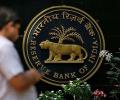
With inflation comfortably below the Reserve Bank of India's (RBI's) 4 per cent median target and likely to undershoot its 3.7 per cent projection for 2025-26 (FY26), there is room for the monetary policy easing cycle to be sustained, the Finance Ministry said on Monday. The comments, featured in the ministry's Monthly Economic Review for June 2025, assume significance ahead of the Monetary Policy Committee (MPC) meeting of the Reserve Bank of India (RBI) scheduled to begin from August 5.

Housing demand should improve nationwide after the Reserve Bank of India (RBI) cut the repo rate by a larger-than-expected 50 basis points (bps) on Friday, said real estate industry executives. The rate cut comes after housing sales in top Indian cities in the first quarter of 2025 dipped 28 per cent due to skyrocketing residential property prices and geopolitical headwinds, according to Anarock.

There is a need for real-time or near real-time credit reporting, instead of the current fortnightly system, to improve underwriting precision, enable timely reflection of borrower actions such as loan closures or repayments, and deliver a superior consumer experience, Deputy Governor of the Reserve Bank of India (RBI), M Rajeshwar Rao said on Wednesday.

.jpg)
Ledger entries in NSEL books show no record of T+2 leg of the paired trades with borrowers.

The Trump trade shock is a chance to push long-overdue reforms, rather than tinker with tariffs to appease the US, suggests M Govinda Rao.
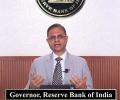
'India has the potential to grow at more than 7%, with the monetary policy providing a supportive hand.'

Around 74 per cent rural households expect their incomes to increase in the next one year, according to a bimonthly survey conducted by the National Bank for Agriculture and Rural Development (Nabard) in May 2025. The percentage recorded was 72 in March.

Maruti, IndusInd Bank, Bajaj Finserv, Eternal, Mahindra & Mahindra, Tata Steel, Kotak Mahindra Bank, Titan, HDFC Bank, and NTPC were among the other major gainers. Bharti Airtel and Sun Pharma were the laggards.

'If in our cities, all urban bus transport services are free, then the taxpayers are paying for it, or if electricity were to be made free, that's a huge cost to the rest of the people'

The expectations of a borrowing cut by the government faded among bond-market participants after the general election results because they feel the compulsions of running a coalition may put pressure on the exchequer, according to dealers. The recent trend of moderate depreciation in the rupee's nominal effective exchange rate (NEER) might not persist if there are significant changes to the structural reform agenda.

Domestic gold jewellery consumption is likely to decline by 9-10 per cent in 2025-26, mainly due to a 33 per cent surge in gold prices, a report said on Thursday. The consumption of bars and coins increased 17 per cent and 25 per cent, respectively, in FY24 and FY25, reflecting investor preference for safe-haven assets amid global macroeconomic uncertainty and heightened geopolitical and trade tensions, Icra said in the report.

The trigger for international gold prices rising to $3,000 per ounce was Germany's upcoming heavy government borrowing.

The Reserve Bank of India (RBI) on Wednesday came out with comprehensive draft guidelines to harmonise and regulate gold loans across all financial entities, including putting a cap of 75 per cent on loan-to-value (LTV) ratio. The draft guidelines also aim to address concerns related to certain lending practices, provide clarity on specific aspects, and strengthen the conduct-related standards in the sector.

The Reserve Bank of India (RBI) will meet top executives of asset reconstruction companies (ARCs) on Friday to take stock of the sector. During the meeting, ARCs will also seek clarity from the regulator on bank borrowing. While there is no regulatory ban in place, ARC sources said banks often refuse funding.

'India's fundamentals are a lot better (than those of other emerging market economies).' 'India will suffer (witness a fall in its stock market) what I call the second order effect.' 'And the second order will happen when these funds (belonging to macro and hedge fund investors and which have leveraged Japanese yen-carry trades), because they lose money elsewhere as lot of their positions were financed by borrowing Japanese yen, will have to book profits in investment destinations where they are making money, including in markets like India.' 'They (these investors) will have to effectively sell in countries like India and which is the consequence (the crash in equity markets) that Indian markets might see.'
The RBI on Wednesday slashed key interest rate by 25 basis points, for the second time in a row, to support a shuttering economy hit by reciprocal tariffs imposed by the US. Following the rate cut, the key policy rate eased to 6 per cent providing relief to home, auto and corporate loan borrowers.

Budget 2025-26 delivers a carefully calibrated strategy-stimulating demand and investment while keeping fiscal discipline intact. In an environment marked by global trade disruptions, and a softening in urban consumption, Finance Minister Nirmala Sitharaman has taken a measured approach.

Widespread use of crypto assets, including stablecoins, can have a negative impact on the macroeconomic and financial stability of a country, the Reserve Bank of India (RBI) said on Monday. In its Financial Stability Report (FSR), the banking regulator highlighted that excessive use of crypto assets can reduce effectiveness of monetary policy, worsen fiscal risks, circumvent capital flow management measures, divert resources available for financing the real economy and threaten global financial stability.

Moody's Ratings on Wednesday said India's economic growth will exceed 6.5 per cent in the next fiscal, up from 6.3 per cent this year, on higher government capex and consumption boost from tax cuts and interest rate reduction. Projecting a stable outlook for the banking sector, Moody's said although the operating environment of Indian banks will remain favourable in the next fiscal, their asset quality will deteriorate moderately after substantial improvements in recent years, with some stress in unsecured retail loans, microfinance loans and small business loans.

These are the highlights of the Union Budget 2025-26 presented by Finance Minister Nirmala Sitharaman in Parliament on Saturday.
 © 2026 Rediff.com - Advertise with us - Disclaimer - Privacy Policy - Sitemap - Feedback - About us - Terms of use - Grievances